Posted on

The Skate Bearing Story

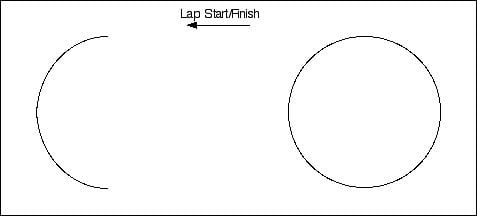
The Inline Skating Track

This will be an odd little digression where I want to talk about one of my many experiences during my time pursuing ice speed skating.  Today I want to tell the skate bearing story.

You Can’t Buy Performance

I’ve never been a big equipment guy (though I love training toys, go figure).  At some point I think I got fed up with people who try to buy performance, either to make up for a lack of talent or being unwilling to put in the work.

And as I so commonly do, I jumped to the opposite extreme often neglecting my equipment.  When I was in Salt Lake City, for example, I’d have my ice speed skates blow apart at least once every year because I’d forget to tighten the bolt on the Klap.

And while I still feel that, for the most part, equipment is secondary to other things relevant to performance, there are places where it matters. … Keep Reading
Posted on

The Sports Continuum

The following is an excerpt/concept from my The Applied Nutrition for Mixed Sports Book/DVD examining what I call the sport continuum, the training continuum and the adaptation continuum.  These are separate but related concepts linking the requirements of specific sports, to their training, to the adaptations that are being sought.

These continuums are relevant because it impacts on the nutritional requirements for any given sport.  Too often I see dietitians give essentially the identical diet regardless of sport.  A good friend, a strength coach in Ireland, once told me a story about sending two of his athletes: one a track sprinter and the other a rugby player to some local nutrition type.  Both were given the identical nutritional program.   That’s absurd.

Clearly optimal nutrition for any given sport will depend on the demands of that sport and the adaptations being sought.  Determining those means first looking at where sports fall on the continuum.… Keep Reading

Posted on

Success Leaves Clues

Among several trite phrases (one of my current favorites is ‘Train like an athlete to look like an athlete”) that often gets thrown around in the fitness community is that of Success Leaves Clues.  The premise, essentially, is that by looking at the habits of the best/elite performers, we can determine what does and doesn’t work since, by semi-logical extension, these folks are all elite because of those habits.

Success Leaves Clues

Make no mistake there is arguably some truth to this but I generally find that people throw around the Success Leaves Clues bit by selectively picking and choosing from whatever habit they happen to want to push; at the same time they tend to ignore that:

  1. The least successful performers usually did the same thing.
  2. There are usually other, far more important habits, that were probably responsible for the results.

So, for example, someone pushing supplements will point out that all high-level bodybuilders used supplements; ergo supplements should be used. … Keep Reading

Posted on

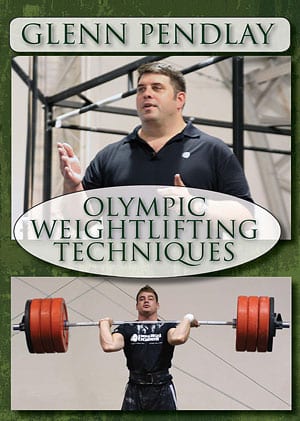
Glenn Pendlay Olympic Lifting Technique DVD

Glenn Pendlay OL Techniqe DVD

Information on Olympic Lifting in English is not available in large amounts and what is available can run the gamut from excellent to absolute trash. The movements are technically complicated, there is little information (again, especially in English) on them and many who teach them, frankly, have no clue what they are doing.

Mind you, this isn’t different for other movements in the weight room but the OL’s are pretty technical movements and a lot is going on in a very short period of time.

A lot of strength coaches seem to think they know what’s happening/what they are doing but, when you watch their videos (cough cough, Mike Boyle and Dos Remedios) it’s clear that they do not.  You see gross technical errors which said coaches then make chronic excuses for.

I’ve even seen DVD and other teaching products that, flatly, taught stuff incorrectly.  And not just on the Youtubes; I mean professionally produced and priced stuff. … Keep Reading

Posted on

Overtraining and Overreaching: Part 6

Having given some general rules of thumb in terms of training inPart 5 I want to wrap up and talk about some lower cost ways to try to monitor overtraining or determine if it’s happening or starting to happen.

Monitoring Training to Prevent Overtraining

Finding ways to determine if overtraining is occurring is a problem that has confronted sports scientists, coaches and athletes for decades.  Many methods and technologies have been developed and I’ve mentioned one or two already.  Most are invasive require regular blood work or some other measurements.  You might see them in a lab or research or perhaps with elite, highly supported athletes.

But the average athlete simply can’t be expected to measure things like blood urea, the free testosterone/cortisol ratio or CPK levels.  Even some of the techniques I mentioned previously such as comparing lactate levels to heart rate, RPE or performance may not be readily available. … Keep Reading